

Your bedroom isn't just where you sleep: it's where your body works overtime to detoxify, repair tissue, and reset your immune system. And if the space itself is working against you, you are losing hours of restorative sleep that is essential for wellness.
Most people do not realize: the average bedroom contains over 70 different chemical compounds that off-gas while you're asleep. Synthetic bedding, particle board furniture, conventional cleaning sprays, poorly fitted window shades can disrupt your endocine system and your circadian rhythm, leading to low-grade inflammation! And this will undermine the basic rest needed by you for sleep!
Creating a low-tox home starts in the bedroom. The return on your investment is immediate: better sleep, less inflammation, wellness environment to mitigate allergies, sharper focus, and a space that actually supports your wellness goals.
Read our book CLEAN DESIGN: Wellness for your Lifestyle. Or if you have limited time, use these simple tips and blueprint we use with our interior design clients as we transform their living spaces and bedrooms into high-performance wellness sanctuaries.
Step 1: Build Your Foundation with Allergen-Aware Bedding and Mattresses
The science is clear: your sheets, mattress protector, and pillowcases are the first line of defense against allergens that compromise sleep quality.
We spend one-third of our lives sleeping and bedding is the most intimate layer in your bedroom: next to your skin, impacting your breathing and immune system for 7-9 hours every night. Ask yourself: are you sleeping on synthetic fabrics treated with chemical finishes? Are you causing inflammation with use of down in your pillows (instead of hypoallergenic down-alt pillows!) so that you wake up with daily congestion? Is the paint on your walls a non or low VOC selection to minimize off-gassing?

What works:
- CLEAN DESIGN HOME has a .5-micron weave patented fabric that physically minimizes dust mites, pollen, and pet dander without chemical treatments
- Natural fibers like organic cotton and linen allow breathability and thermal regulation
- Pillow and mattress protectors create a sealed barrier against allergens while remaining washable
Here's the nuance most brands won't tell you: "hypoallergenic" can be a marketing term. Allergen-aware is truthful - it gives you the information to make the right decision for your family.
Quick win: Start with a 5-micron mattress protector, zippered pillow encasements and a down alternative pillow. These upgrades can reduce nighttime allergen exposure by up to 90%.
Step 2: Replace Toxic Cleaning Products with Non-Toxic Protocols
Most bedrooms smell "clean" but can be saturated with fragrance-type chemicals that may disrupt endocrine function and respiratory health.
Did you know that some conventional cleaning sprays, fabric fresheners, scented candles, and laundry detergents are loaded with synthetic fragrances: phthalates, parabens, and VOCs that linger in fabrics and off-gas for days.
The shift to non-toxic cleaners isn't about being "crunchy." It's about eliminating unnecessary chemical burden in the one room where your body is trying to detoxify.
What we recommend:
- Plant-based, fragrance-free cleaning concentrates for surfaces
- White vinegar, lemon and water solutions for glass and mirrors
- Baking soda for deodorizing (not masking odors with synthetic fragrance)
- Essential oil diffusers sparingly: use only pure, therapeutic-grade oils
But here's where most people stop short: they swap products but don't change their cleaning habits. The real game-changer is adopting a cleaning protocol: a rhythm that maintains a low-tox baseline rather than reacting to buildup.
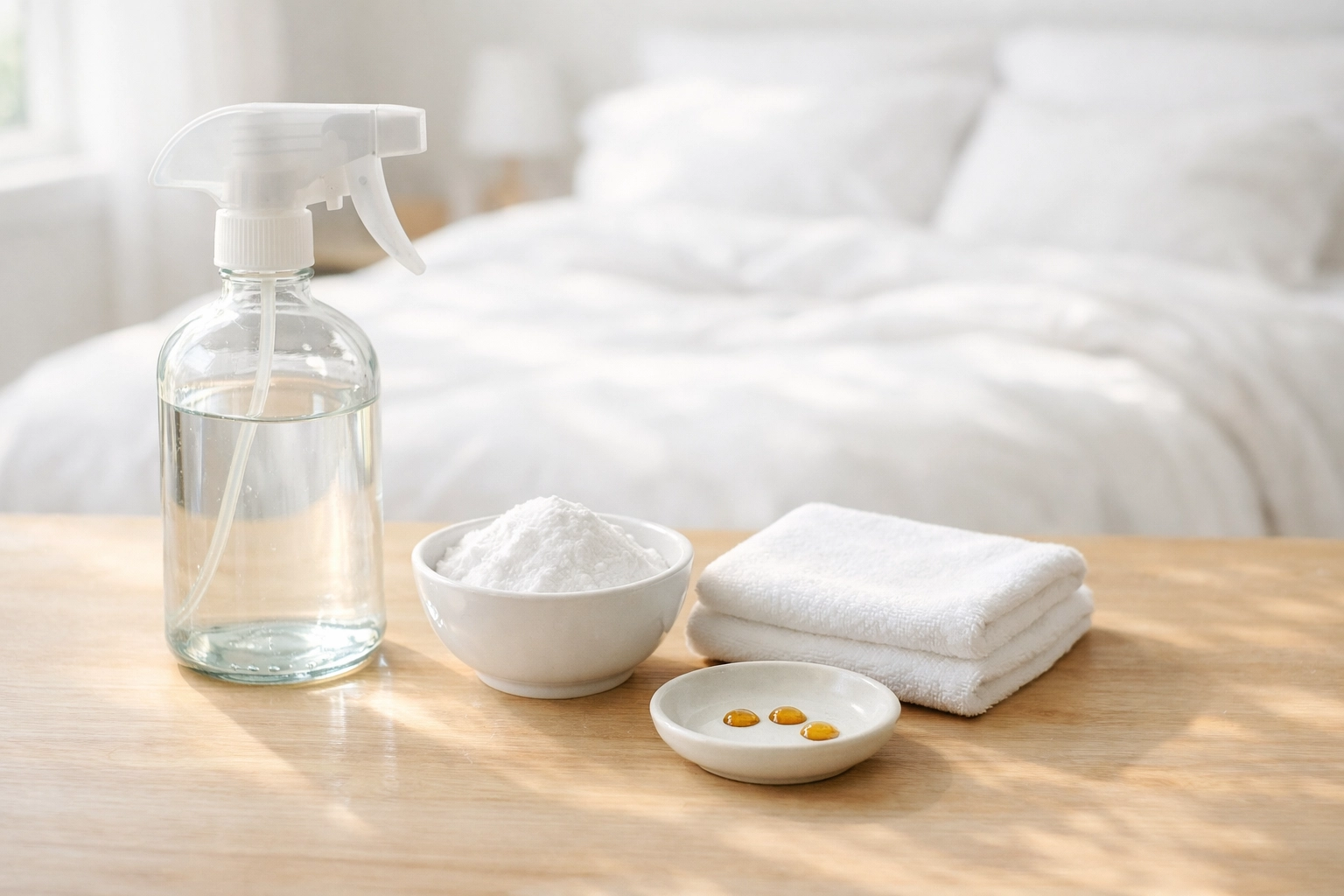
The Clean Design Protocol for bedrooms:
- Weekly: Vacuum with HEPA filtration, wash bedding in warm-to-hot water (130°F+), wipe surfaces with non-toxic cleaner
- Monthly: Rotate and air out pillows, change air filters, clean walls, baseboards and window sills
- Quarterly: Wash pillows and comforters, check for mold in humid corners
- Annually: Deep-clean curtains or blinds, vacuum mattress thoroughly; shred old papers and donate gently-used items
When you build maintenance into your lifestyle: rather than treating it as an occasional deep-clean: you prevent allergen accumulation before it becomes a problem.
Step 3: Optimize Air Quality and Ventilation
Indoor air can be 2-5 times more polluted than outdoor air, and your bedroom concentrates that exposure during your most vulnerable hours.
This step is non-negotiable. You can have the cleanest bedding and the best non-toxic cleaners, but if you're breathing stagnant, pollutant-laden air for eight hours every night, you're still compromising your wellness.
The ventilation hierarchy:
- Natural ventilation first: Open windows daily (even just 10-15 minutes) to flush out CO2 and VOCs
- Mechanical filtration second: Invest in a HEPA air purifier rated for your bedroom square footage (and change or wash the filters regularly!)
- Humidity control third: Keep relative humidity between 30-50% to prevent mold growth and dust mite proliferation
Plants are a beautiful addition, but let's be honest: you'd need a small jungle to meaningfully filter air through foliage alone. They're aesthetic and mood-boosting, not a substitute for proper ventilation.
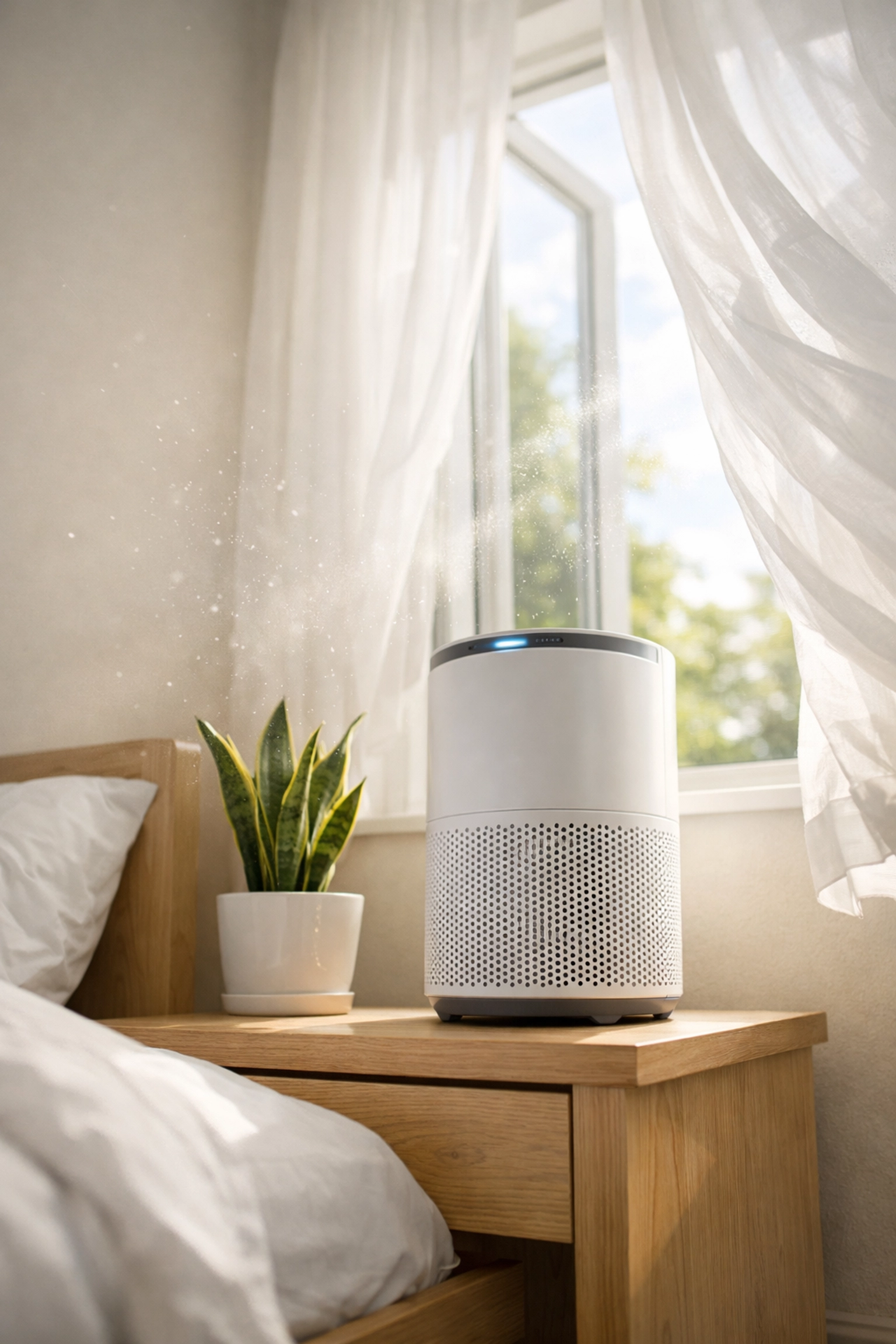
One often-overlooked detail: your HVAC system. If you have central air, upgrade to MERV 13 filters and change them every 60-90 days. Standard fiberglass filters do almost nothing for air quality: they're designed to protect your HVAC unit, not your lungs.
Step 4: Choose Furniture and Materials That Don't Off-Gas
Most bedroom furniture is constructed from particle board and MDF: materials held together with formaldehyde-based adhesives that off-gas for years.
This is where wellness interior design gets strategic - buy the best quality you can afford, or shop vintage and sand/stain it to a 'new look' which is sustainability at its best! It's not just about aesthetics or style: it's about selecting materials that support long-term health without sacrificing beauty or function.
What to look for:
- Solid wood furniture from FSC-certified or reclaimed sources (or vintage!)
- Natural finishes: beeswax, linseed oil, water-based polyurethane
- Zero-VOC paint for walls
- Natural fiber rugs (wool, jute, cotton, seagrass) over hardwood floors
Flooring deserves special mention. Wall-to-wall carpeting is a wellness disaster: it traps allergens, harbors dust mites, and requires chemical-laden treatments to maintain.
Step 5: Create a Maintenance Protocol You'll Actually Follow
Here's the truth no one wants to hear: the low-tox home isn't a one-time transformation. It's a lifestyle.
You can invest in the cleanest materials available, but without consistent maintenance, allergens and toxins creep back in. Dust accumulates. Humidity fluctuates. Products degrade.
The difference between a wellness bedroom that works and one that becomes just another aspiration? Systems that embed healthy habits into your routine.

Your sustainable maintenance checklist:
- Set recurring calendar reminders for washing bedding, replacing air filters, and rotating mattresses
- Keep cleaning supplies minimal and accessible (stored in the bedroom closet, not under the kitchen sink)
- Audit your bedroom quarterly: check for new sources of VOCs (gifts, purchases, repairs), test humidity levels, replace what's worn out
- Commit to the "one in, one out" rule: for every new item entering your bedroom, evaluate if it meets your wellness standards
We've worked with clients who've spent thousands on organic mattresses and non-toxic paint only to reintroduce conventional dryer sheets and scented plug-ins within months. Don't let lifestyle creep undermine your investment.
The protocol isn't about perfection: it's about progress and awareness. Some weeks you'll skip the deep clean. Some months you'll forget to change the air filter. That's human. The goal is to create enough structural support that maintaining a low-tox bedroom becomes second nature, not a chore.
Your Bedroom as Sanctuary
The bedroom you're sleeping in right now is either supporting your health: or quietly working against it.
A low-tox home isn't about fear or deprivation.
- It's about reclaiming the 33% of your life spent in bed and making that time count.
- It's about waking up with clear sinuses, consistent energy, and clarity.
- It's about wellness in a body that has had the chance to truly rest.
The five-step blueprint we've outlined here: allergen-aware bedding, non-toxic cleaning protocols, optimized air quality, mindful furniture choices, and sustainable maintenance: isn't theoretical. It's the exact framework we use with every wellness-focused interior design project we take on.
What's your strategic next move? Start with Step 1. Upgrade your bedding foundation this week. Then build from there: one intentional choice at a time.
Because the bedroom you deserve isn't an aspiration. It's a blueprint.
CONSULTING AVAILABLE
Our advice has become invaluable to our design clients. Sourcing non-toxic furniture requires knowing which certifications matter (GREENGUARD Gold, GOTS, OEKO-TEX) and steers you away from those brands which are greenwashing. Plus we work with clients to balance budget constraints with wellness priorities.
The strategic next move? Contact our team and we can determine if a short consultation or a more involved project is best for your needs
CLEAN DESIGN HOME® guides you "from the foundation to the furnishings"!